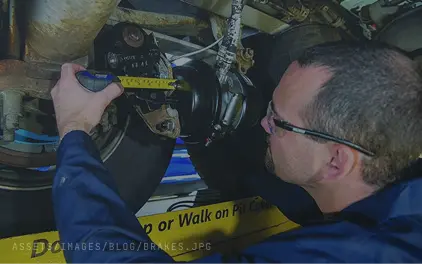
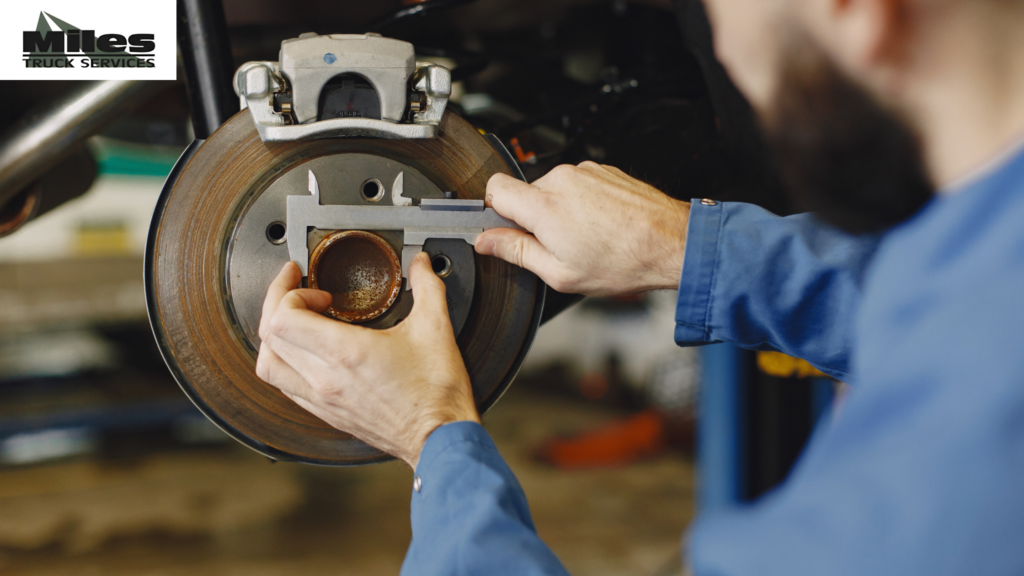
A loaded semi does not give you much room for error when its brakes stop working as they should.
If your truck needs semi truck brake repair in Elkhart, unusual noises, air-pressure loss, longer stopping distance, pulling, or excessive brake heat deserve immediate attention. Continuing to run the truck can turn a repairable problem into a roadside breakdown or serious safety issue.
That matters in Elkhart. Local trucks regularly move between US-20, US-33, SR-19, and the I-80/I-90 Indiana Toll Road corridor. INDOT maps confirm these routes form major connections through Elkhart County.
Miles Truck Services provides brake system inspection, repair, replacement, and air-system service from its Elkhart shop at 3301 Magnum Drive. The company also provides mobile road service and emergency assistance when a truck cannot safely make it to the shop.
Quick answer: A semi truck needs immediate brake attention if stopping distance increases, air pressure drops, the truck pulls while braking, you hear grinding or unusual brake noise, an ABS or brake warning appears, or you smell overheated brakes. Do not wait for complete brake failure to schedule an inspection.
Why Semi Truck Brake Problems Require Fast Attention
A commercial truck’s braking system handles far more weight and heat than the brakes on a passenger vehicle.
Every stop creates friction. Heavy loads, repeated braking, congested routes, delivery schedules, and stop-and-go operation can increase that demand.
FMCSA rules require commercial vehicle braking components to be maintained so vehicles can stop safely and reliably. Those components include actuators, slack adjusters, linings, pads, drums, and rotors.
For a fleet manager, a developing brake problem can affect more than the repair budget.
| Brake Problem | What It Can Mean for Your Fleet |
| Increased stopping distance | Higher safety risk |
| Air-pressure loss | Truck may need to be removed from service |
| Uneven braking | Poor vehicle control and abnormal wear |
| Worn friction components | Damage can spread to other brake parts |
| Brake inspection issue | Possible compliance and downtime concerns |
| Roadside failure | Missed loads, towing, repair delays |
Catching the problem early usually gives you more control over when and where the truck gets repaired.
Signs Your Semi Truck Brakes Need Immediate Repair
1. The Truck Takes Longer to Stop
A change in stopping distance should never become the truck’s “new normal.”
If a driver needs more pedal input or more road to slow the vehicle, the braking system needs inspection.
Possible causes include:
- Worn brake friction material
- Poor brake adjustment
- Air-system problems
- Damaged drums or rotors
- Contaminated braking surfaces
- Problems affecting individual wheel-end braking
The important clue is the change. Drivers who operate the same tractor every day often notice that change before anyone else.
Practical fleet tip
Ask drivers to report differences in braking feel during post-trip reports instead of waiting for a warning light. Small changes can provide an early clue.
2. You Hear Grinding, Scraping, or New Brake Noise
Commercial truck brakes are not silent in every operating condition, so one sound alone does not diagnose the problem.
A new grinding, scraping, or harsh mechanical noise during braking does deserve inspection.
It may point to worn friction material, damaged components, improper contact, or another mechanical issue.
Do not simply increase radio volume and finish the week’s routes.
Noise combined with reduced braking, vibration, pulling, or heat makes inspection even more important.
3. An ABS or Brake Warning Appears
Dashboard warnings exist for a reason.
An ABS warning may involve a sensor, wiring problem, wheel-end issue, or another fault requiring diagnosis. A low-air warning is more urgent because proper air pressure is essential to air-brake operation.
FMCSA regulations also include requirements covering commercial vehicle brake systems and applicable anti-lock braking systems.
A warning light does not tell you which part to replace. Proper diagnostics should identify the actual fault before repairs begin.
4. The Semi Pulls to One Side Under Braking
A tractor or combination that pulls while braking can become difficult to control, particularly when loaded or traveling on wet, snowy, or icy Northern Indiana roads.
Possible causes may include:
- Uneven brake adjustment
- A problem at one wheel end
- Contaminated friction surfaces
- Brake component wear
- Air-delivery problems
Because steering, suspension, tires, and alignment can also affect how a truck behaves on the road, technicians should inspect the vehicle rather than assume every pull comes from one brake component.
5. Air Pressure Drops or Builds Abnormally
Air-pressure problems deserve immediate attention.
A semi’s air-brake system depends on maintaining adequate pressure and delivering it correctly throughout the system.
Problems can involve:
- Air lines or hoses
- Connections
- Brake chambers
- Valves
- Compressor-related components
- Air-system leaks
Miles Truck Services specifically lists air brake and air system repair and maintenance among its Elkhart-area services.
FMCSA also identifies brake-system pressure loss among serious repair and maintenance concerns.
6. You Smell Hot Brakes or Notice Excessive Heat
A burning smell near a wheel end deserves investigation.
Possible causes include a dragging brake, abnormal friction, adjustment problems, or a component that is not releasing correctly.
Heat can damage more than the original failing part.
Do not rely on smell alone
Brake components become hot during normal operation. The concern is unusual heat, a noticeable difference from other wheel ends, smoke, a strong burning odor, or another change in braking performance.
If there are signs of severe overheating or smoke, treat the condition as a safety issue rather than attempting to complete the route.
Understanding the Semi Truck Air Brake System
You do not need to be a technician to understand why several different components can produce similar brake symptoms.
Brake Chambers
Brake chambers convert air pressure into mechanical force used to apply the brakes.
Damage, leaks, or related mechanical problems can affect braking performance.
Brake Shoes, Linings, Drums, Pads, and Rotors
These are friction components. Depending on the brake design, they create the friction needed to slow the wheel.
FMCSA specifically recognizes components such as linings, pads, drums, and rotors as parts of commercial vehicle braking systems that must be properly maintained.
Air Lines and Air-System Components
Air has to move through the system without unacceptable leakage or restriction.
Damaged hoses, fittings, valves, or related components can interfere with normal operation.
ABS Components
The anti-lock braking system helps control wheel lock under braking. Sensors, wiring, and other electrical or mechanical faults can trigger an ABS warning and require diagnostic testing.
Common Problems Found During Semi Truck Brake Inspections
A symptom tells you where to start. An inspection determines what actually needs repair.
| Driver or Fleet Complaint | Possible Area to Inspect | Why It Matters |
| Longer stopping distance | Friction components, adjustment, air system | Reduced stopping performance |
| Low-air warning | Lines, fittings, chambers, valves, compressor system | Possible pressure loss |
| Pulling when braking | Individual wheel ends and brake balance | Vehicle control |
| Grinding | Linings/pads, drums/rotors, hardware | Possible component damage |
| ABS warning | Sensors, wiring, related components | Requires diagnosis |
| Excessive wheel-end heat | Dragging or improperly operating brake | Heat and component damage |
The table is a diagnostic starting point, not a substitute for hands-on inspection.
DOT Brake Compliance Matters Too
Brake maintenance is also a compliance issue for commercial fleets.
FMCSA’s safety guidance lists defective brakes, brake-system pressure loss, and failure to maintain vehicle parts and accessories among significant maintenance concerns. Its guidance also identifies situations involving defective brakes on a commercial vehicle combination that can lead to an out-of-service condition.
That makes preventive brake inspections useful for more than avoiding breakdowns.
They can help fleet managers find defects before a roadside inspection, scheduled DOT inspection, or driver complaint exposes them at a worse time.
Miles Truck Services provides DOT inspections alongside truck, trailer, fleet, brake, and air-system services in Elkhart.
Why Elkhart Trucks Can Put Brakes Through Heavy Use
Elkhart sits in a busy Northern Indiana transportation network.
Trucks may move from industrial areas around Elkhart toward Goshen on US-33, connect with US-20, travel west toward the South Bend area, or enter the I-80/I-90 corridor for regional and long-haul freight. INDOT’s Elkhart County route information confirms US-20, US-33, SR-19, and I-80/I-90 among the area’s major roadway connections.
Local and regional fleet work can mean:
- Repeated stops
- Loaded trailers
- Urban and industrial traffic
- Highway-to-local-road transitions
- Winter moisture and road treatment
- Tight delivery schedules
Those conditions make routine brake checks especially valuable.
Preventive Semi Truck Brake Maintenance Checklist
Fleet managers and drivers can watch for problems between scheduled services.
Driver checks
- Report changes in stopping distance.
- Pay attention to low-air warnings.
- Report new grinding or scraping sounds.
- Watch ABS and brake warning indicators.
- Note pulling or unusual vibration during braking.
- Report burning odors, smoke, or unusual heat.
Shop inspections
A qualified technician can check:
- Brake friction components
- Drums or rotors
- Brake chambers
- Slack adjusters and actuation components
- Air lines and hoses
- Air-system leaks
- ABS-related faults
- Overall brake operation
Maintenance frequency
There is no single mileage interval that fits every fleet.
Inspection frequency should account for the truck’s duty cycle, mileage, loads, operating environment, manufacturer guidance, previous repair history, and applicable inspection requirements.
A local delivery truck with repeated stops may create a different brake-maintenance pattern from a tractor spending most of its time at highway speed.
When Should You Stop Driving the Truck?
Do not treat every brake symptom as something that can wait until the next scheduled PM.
Arrange prompt professional evaluation if:
- The truck cannot stop normally.
- Air pressure will not remain at a safe operating level.
- A low-air warning activates.
- Braking ability suddenly changes.
- Severe grinding occurs.
- A wheel end is smoking or severely overheating.
- The truck becomes difficult to control while braking.
FMCSA regulations prohibit operation of a commercial vehicle in an unsafe condition, and brake-system defects can result in out-of-service consequences depending on the defect and extent of the problem.
When safe operation is in doubt, parking the truck and arranging service is the better decision.
Semi Truck Brake Repair in Elkhart at Miles Truck Services
Miles Truck Services provides brake system inspection, repair and replacement, along with air brake and air system repair and maintenance. Its Elkhart facility is located at 3301 Magnum Drive, Elkhart, IN 46516.
The Elkhart operation also supports:
- Truck and trailer repair
- Fleet service
- DOT inspections
- Mobile road service
- Emergency diagnostics
- Roadside assistance
Miles Truck Services states that emergency service is available 24/7 for trucks that are down and need roadside support.
That gives Elkhart fleet managers options whether a brake problem appears during planned maintenance or while a truck is already on the road.
Frequently Asked Questions About Semi Truck Brake Repair in Elkhart
What are the most urgent signs of semi truck brake trouble?
Longer stopping distance, low air pressure, severe grinding, pulling while braking, abnormal heat, burning odors, smoke, and sudden changes in braking performance all warrant prompt attention.
Can I keep driving with an ABS warning light?
An ABS warning indicates a fault that should be diagnosed. Because the cause can vary, have the system inspected rather than assuming the warning is harmless. If other brake symptoms or warnings are present, the situation may require more immediate action.
What causes air-brake pressure problems?
Possible causes include leaks in lines or connections, damaged chambers, valve problems, or issues elsewhere in the compressed-air system. Proper testing is needed to find the source.
How often should semi truck brakes be inspected?
Follow applicable inspection requirements and the vehicle manufacturer’s maintenance guidance, then adjust preventive maintenance based on mileage, load, route type, duty cycle, and repair history.
Where can I get semi truck brake repair in Elkhart, IN?
Miles Truck Services performs brake system and air-system service at its Elkhart location at 3301 Magnum Drive and also offers mobile road and emergency support.
Get Brake Problems Checked Before They Become Downtime
Brake problems rarely become cheaper or safer by ignoring them.
If a driver reports longer stopping distance, abnormal air pressure, grinding, pulling, excessive heat, or a brake warning, get the truck inspected before sending it through another full route.
For fleets looking for semi truck brake repair in Elkhart, Miles Truck Services can inspect the braking and air systems, identify the cause, and build a repair plan aimed at getting the truck safely back into service.